In late July of this year, I woke up one morning and immediately rushed to my board game table with a deck of playing cards, some sticky notes, and a pencil. After a couple of hours the very first iteration of my card game Office Orcs was born. It was incredibly unbalanced, ugly, and basically illegible to anyone but me, but it worked. Exhausted but excited, my wife finally pulled me away from the table when she realized I didn’t even know it was dinner time.

That would make for a great story if that was the genesis of my game idea, but the truth is always much more messy than that. I had actually been mulling over some sort of board or card game that involved orcs or some other fantasy creature ransacking a modern office setting for some years now, but I had never been able to settle on a format. One iteration of this idea was a web prototype I built in Javascript back in 2022, that somehow morphed into a 1 vs 1 Bigfoot Battleship type game. Things were looking good, but then I gave up on the idea after I realized that the game was always “solvable” after the first turn. I had made an advanced tic-tac-toe.
Although it is dejecting to have to go back to the drawing board after spending a good chunk of time on a design, I find that it’s important to let your brain fall down these rabbit holes at least a little bit. You end up stress testing mechanics and coming across concepts that will elevate your next idea that much higher. Still I could not shake off the office setting from my brain. Over the next few years I started and then quickly stopped on a number of fantasy office ideas as I kept running into a soup of game mechanisms that didn’t mix.
I’m still not really sure how I suddenly got the main flow of the game hammered down on that random July day when I woke up, but I think it just clicked that I needed to give in completely to the theme of the game and let it drive the gameplay loop, not me. My preconceived notions on what I think makes a game fun were standing in the way. The game is in an office setting, so why not have location cards for different types of office rooms? Different rooms in offices do different things, so why not give them effects that match their purpose? Why are the orcs even in this office in the first place, well to eat people obviously, so there’s the scoring system. The eureka moment though was when I added varying bust values to each office room and started playing against myself with a standard deck of playing cards. At that point I realized I had something here.
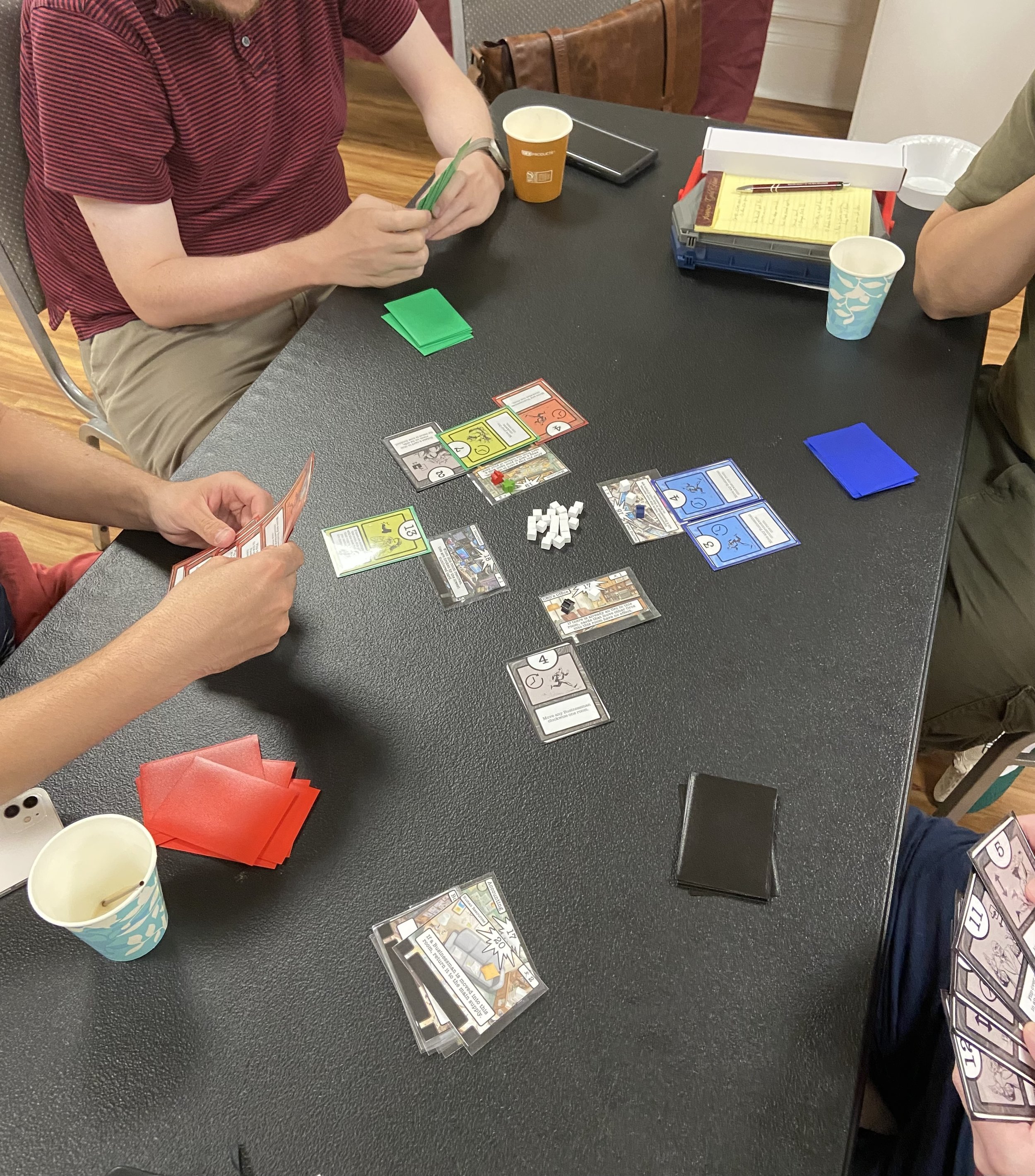
I however did not want to run into the same problem my Bigfoot game had, so I knew I needed to start testing what I had in front of other people as soon as possible. I slapped some abilities on the cards without thinking too much about them, grabbed some placeholder art, and repurposed some board game components from other games I own. Then thanks to my lovely wife who sat and played the first versions of Office Orcs when it was a totally unbalanced mess, I was able to massage some of the abilities and card values to a place that I felt good showing it to strangers.
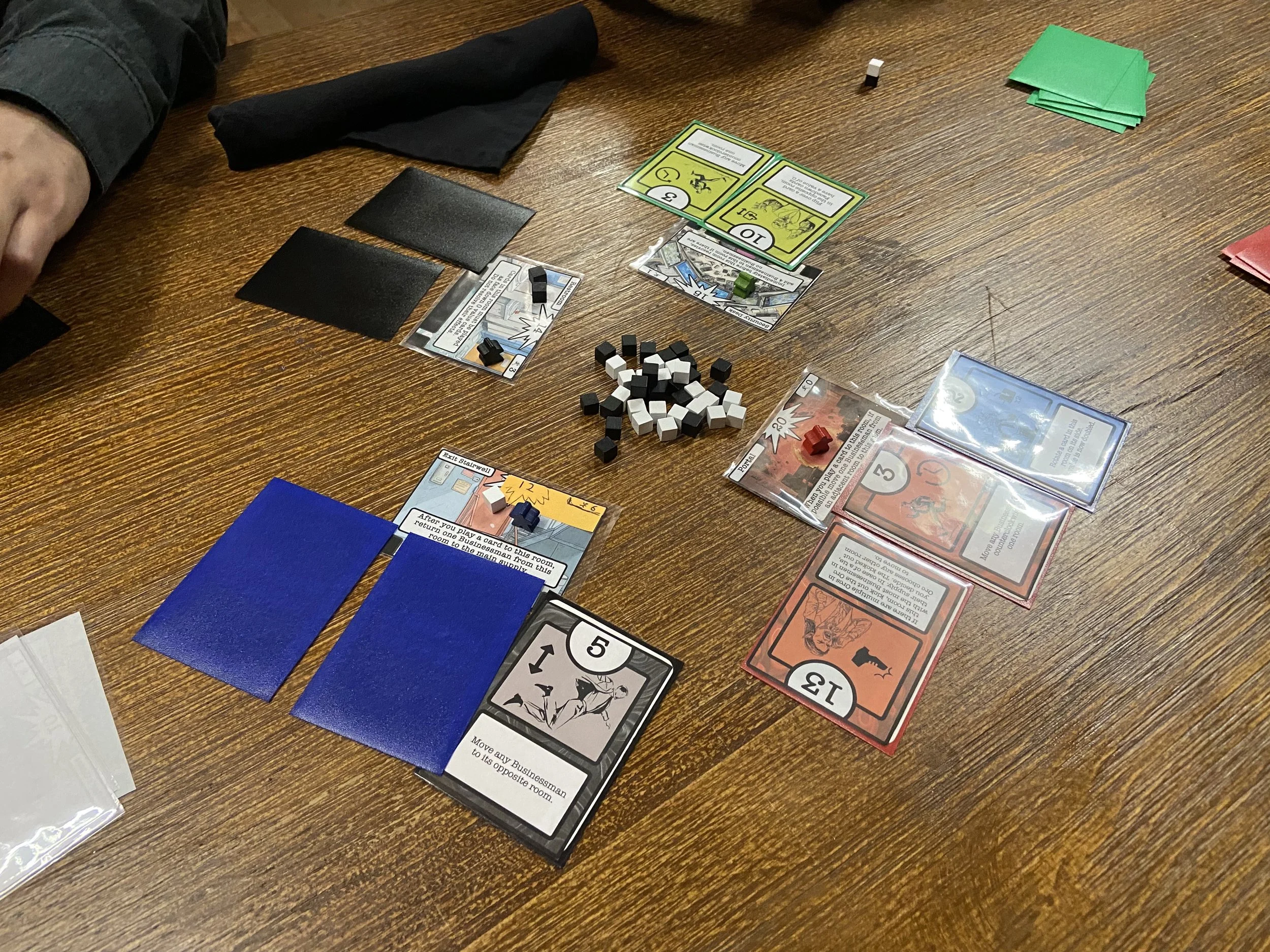
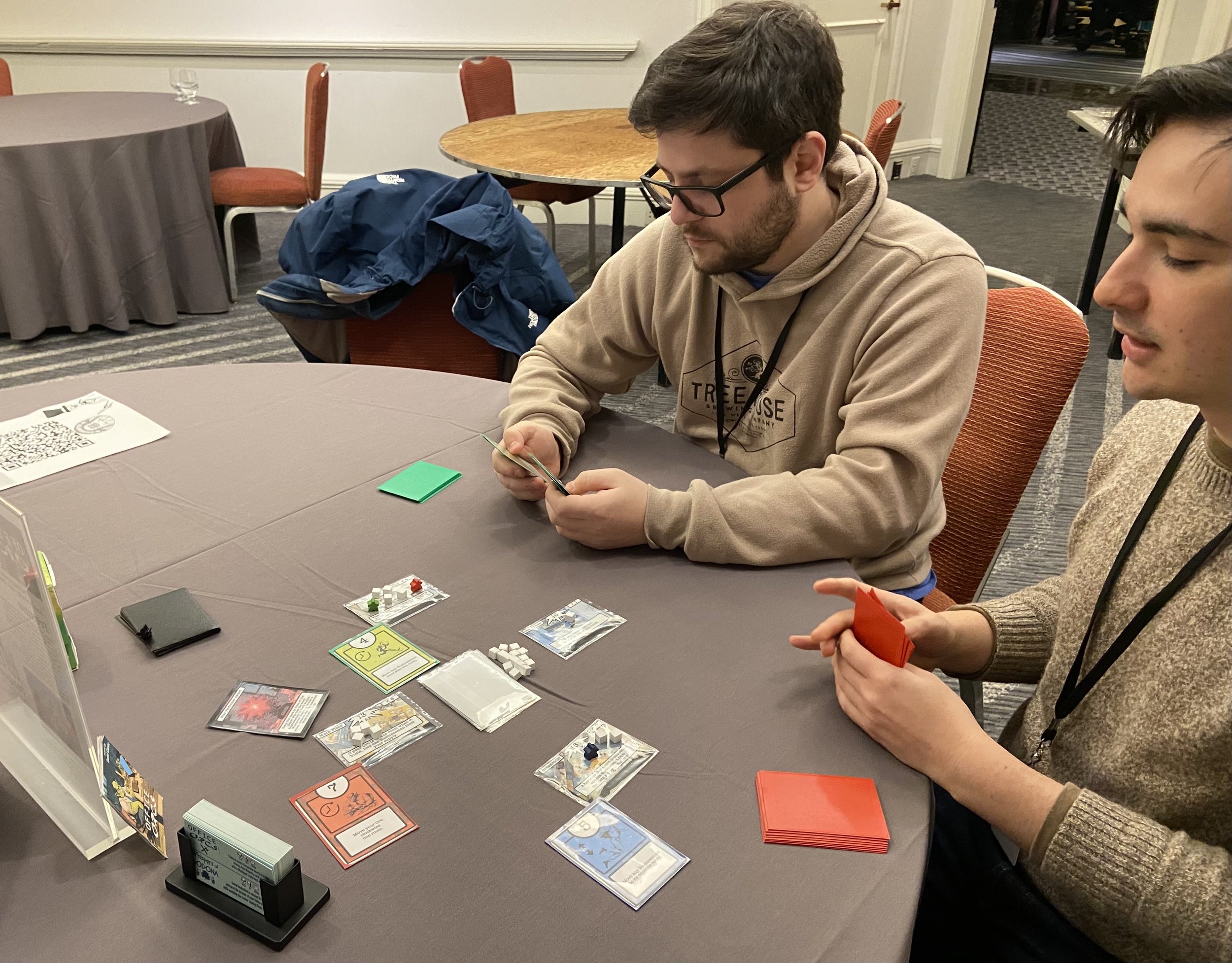
That leads us to the boring but important part. The next few months and even beyond are just refining, adjusting, refining… I am lucky to live in an area that has access to many different game groups and types of gamers. Since July I have been able to test the Office Orc prototype at a number of different events. So far I’ve tested my game at my library’s game nights, a board game meetup I host at a local brewery, the Boston Game Maker’s Guild testing events, and most recently at the Everwinter Gaming Convention. Thank you to everyone who has a played a version of this game at some point, your feedback has been invaluable! The best part of this whole process is meeting people who after playing a round, lean back and say “you know, that was actually pretty fun.” Even better is when people get excited and propose even more mechanics and content that could make the game bigger and more grandiose. I’m hoping to keep Office Orcs as a quick and light card game, but the enthusiasm for even more “game” keeps me on the lookout for potential expansion opportunities!
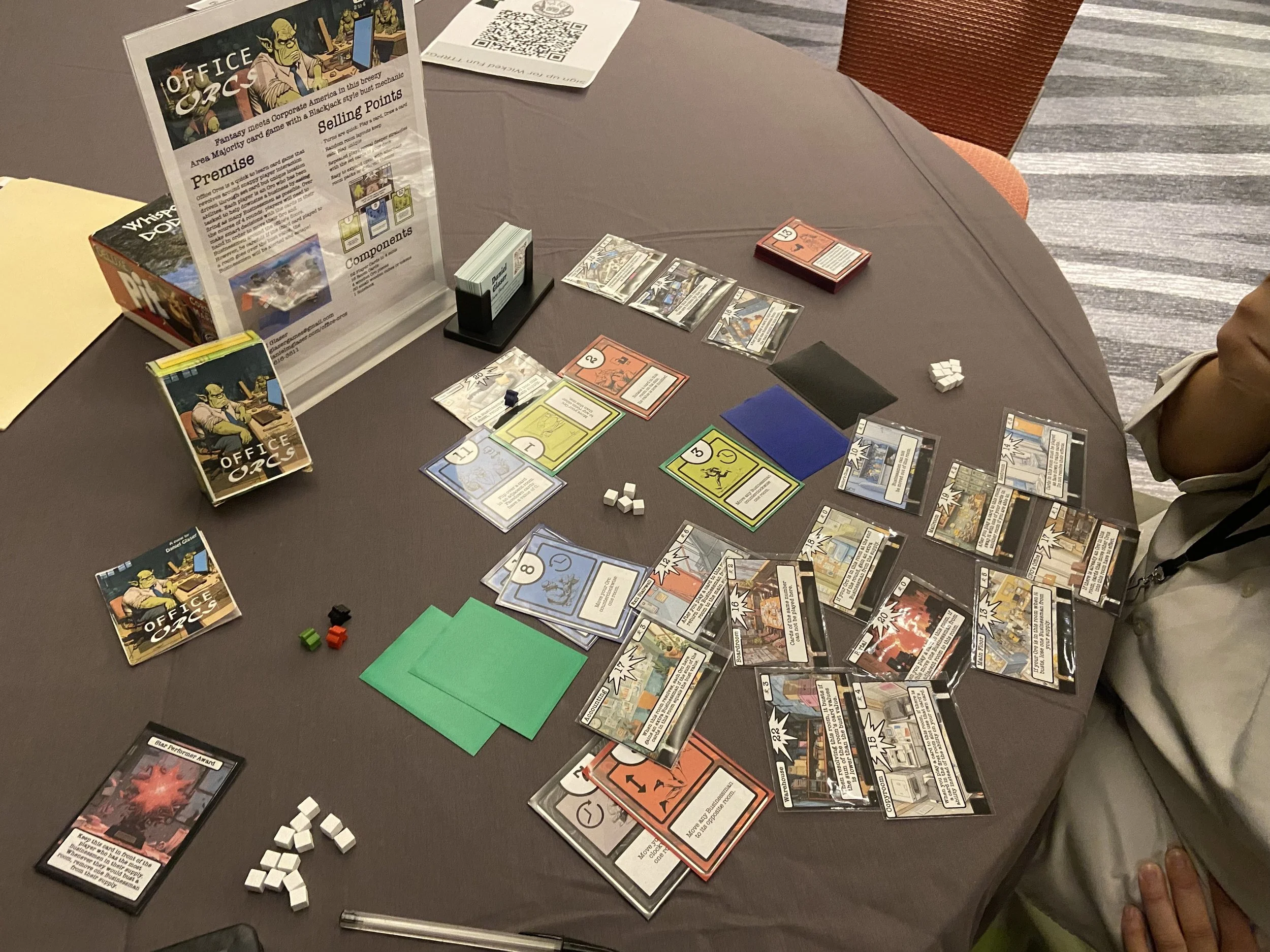
Beyond just lots of testing, there was a lot more work done in the last few months. These include writing the first draft of the rulebook, creating a sell sheet, and building an accessible online prototype on Screentop. I can not overstate how valuable building the online prototype has been. While playtesting in person can be difficult to coordinate, it is much quicker to organize online. But perhaps more importantly whenever I have some downtime I can quickly pull out my phone and run through a game in “Admin” mode where I can play as each player and “math” out any potential edge cases that I should handle. Nothing is stopping me from logging a playtest on the subway!
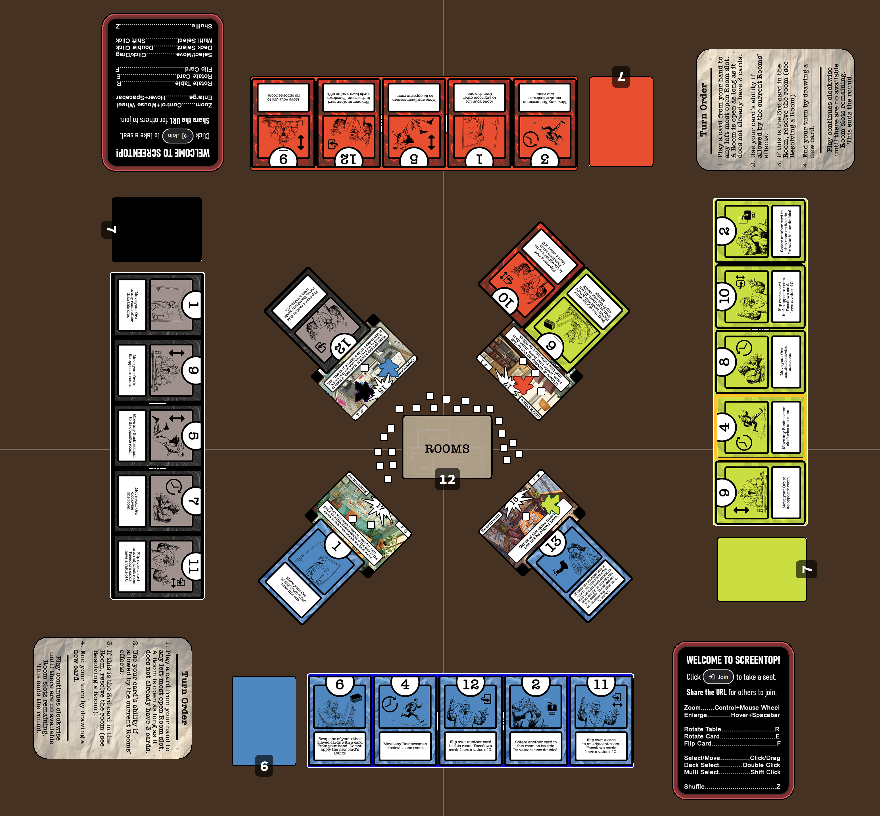
I will leave a word of caution here though, to not become too reliant on the online prototype. No matter how hard you try, a screen can not simulate what it feels like to physically shuffle a deck, how the light might reflect on your cards, or how it feels to sit across the table from someone with the game in the middle. At the end of the day you are designing a tactile product that is meant to be touched, and every decision you make should be done with this in mind.

So what’s next? In its current state I consider the game to be close to done (at least gameplay wise), however there are still some tweaks I need to do to make the end game more interesting and less deterministic. Currently in the final round of the game, if a player is too far behind in points, they may have no way to catch up to first place rendering their final plays pointless other than to spoil other players. I recently added a “slow down mechanic” card that solely impacts the first place player to prevent them from totally running away with the game, but there is still room for improvement here. This last weekend a playtester proposed the idea of swapping the current point cubes with two sided point tokens. Each token would have a secret number value (from 1 to 2 or 3) on one side that is hidden to all players until the end of the game keeping player’s true scores unknown until the final reveal. I think this is an elegant way to add some end game ambiguity without adding any complexity. However I will need to do a good bit of playtesting to make sure this doesn’t feel too unfair for the first place player. Alternatively, I could have my new “slow down” card make the first place player give a point to the last place player. Another playtester proposed hidden objective cards. Regardless, more design work needs to be done here.
Beyond that issue, here is what is remaining to be done.
“whose” typo in rulebook
Bold action words on Orc cards
Water Cooler room “each orc” clarification
Cards that move businessmen should clarify it is a single businessman
Add Star Performer Award card to rulebook and online prototype
The Orc 2 card should say “rotate another card”
Add clear icons to indicate room effects
Exit Stairwell and Closet rooms are too punishing, continue balancing room values
Two player rule clarifications: orc card colors correspond to orc piece of the same color
Remove placeholder art for illustration (big to do)
Anyway, thanks for following along with this design process. I have just signed up for Unpub playtest slots at PAX East in March 2026 for even more testing, so I will probably update this blog again after that event with what’s changed. If you have any questions about the game or are a publisher that’s interested, please do not hesitate to reach out at danielglasergames@gmail.com !