Major Updates - Developer Diary #3

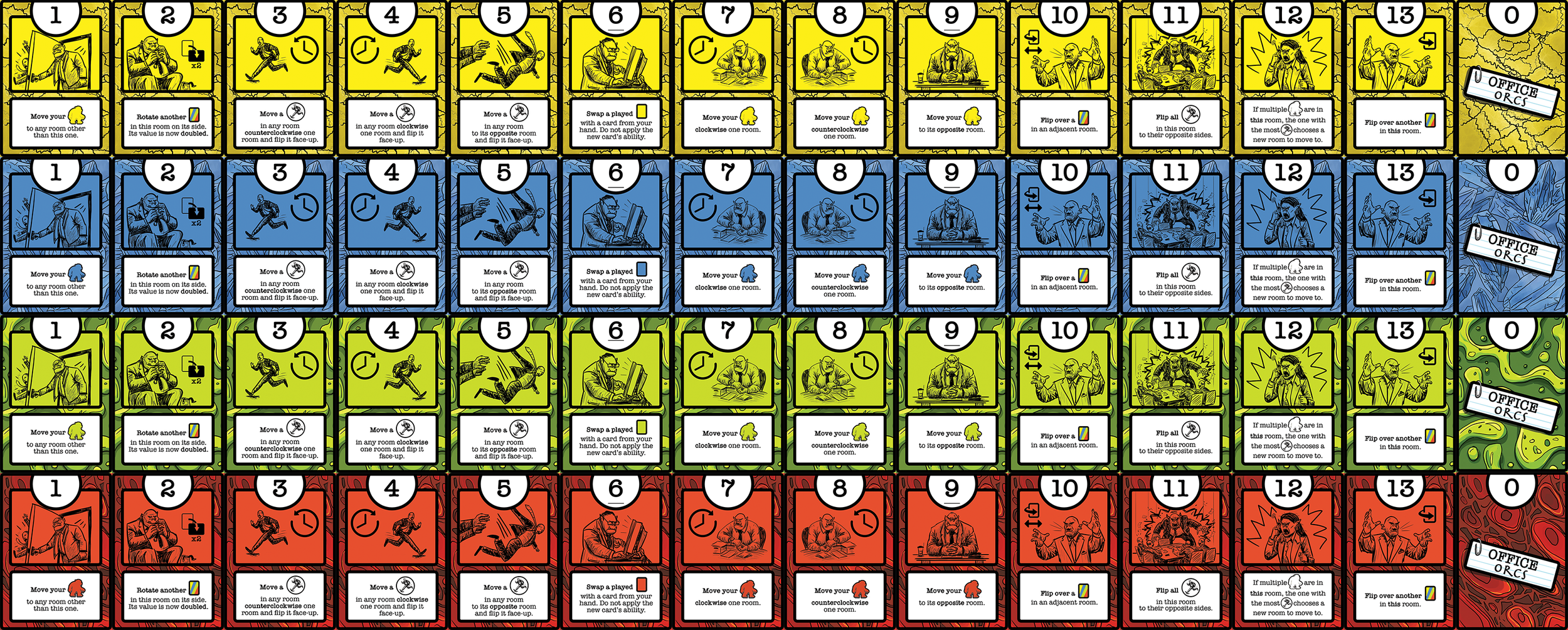
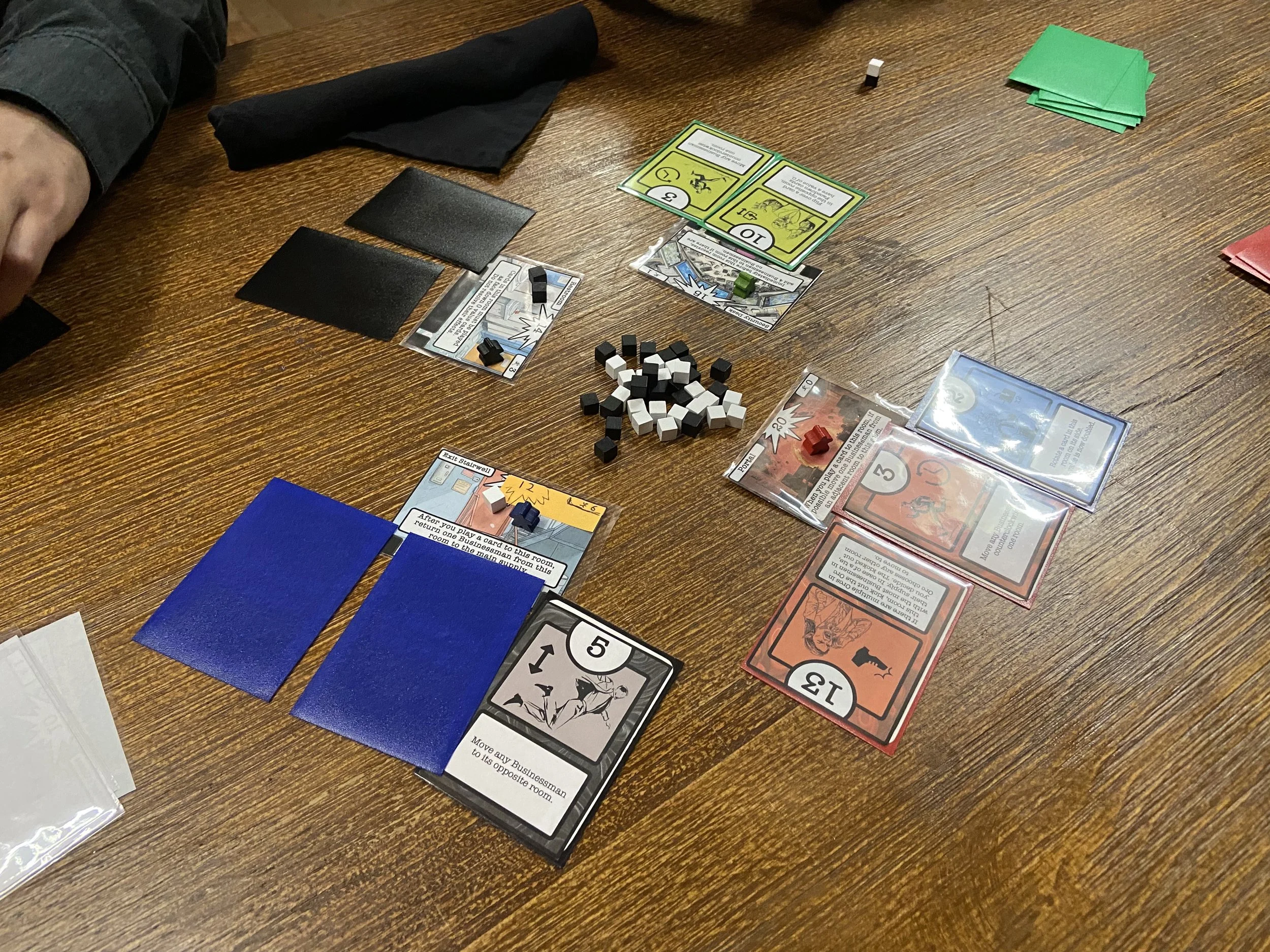
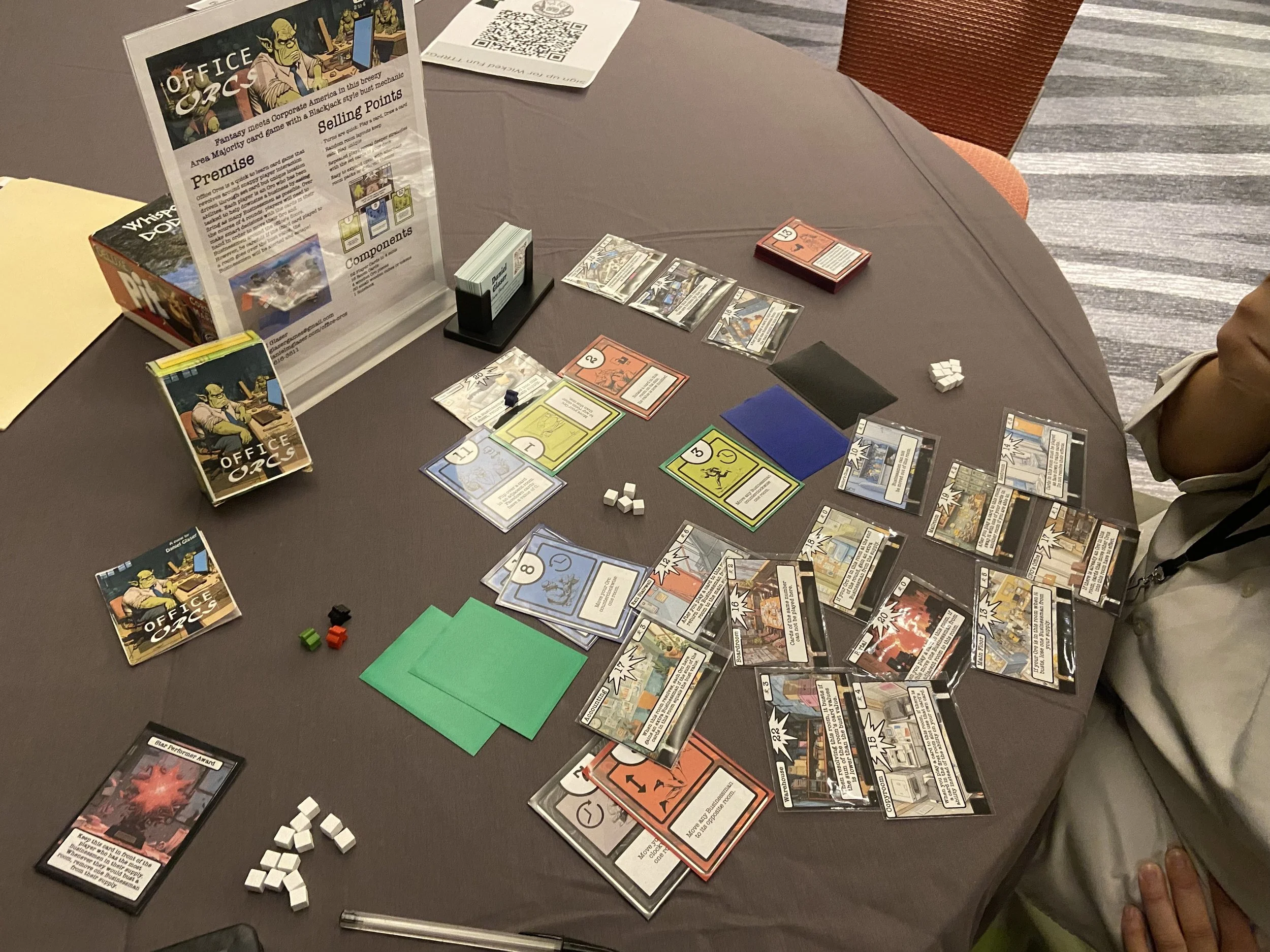
Wow! Hello, everyone. Happy to share some major updates about Office Orcs right before another big round of play-testing at PAX East. Probably the biggest news right off the bat was that I felt comfortable enough with where the game was at in terms of balance, art, and iconography that I ordered a one off prototype printing from TheGamecrafter.com’s board game print on demand service. I’m super excited about this update because it will make playtesting this version of Office Orcs so much easier. I still say “this” version because I still want to be super sure that the whole game is working as intended before I go down the Kickstarter rabbit hole for a final print run. Check out my initial impressions in the video below!

If you couldn’t tell in the video, I’m pretty happy with how it turned out. It looks like I’ll need to do some minor visual cleanup tweaks, but other than that I think the look and the feel of the game is pretty much done!

PAX EAST 2026

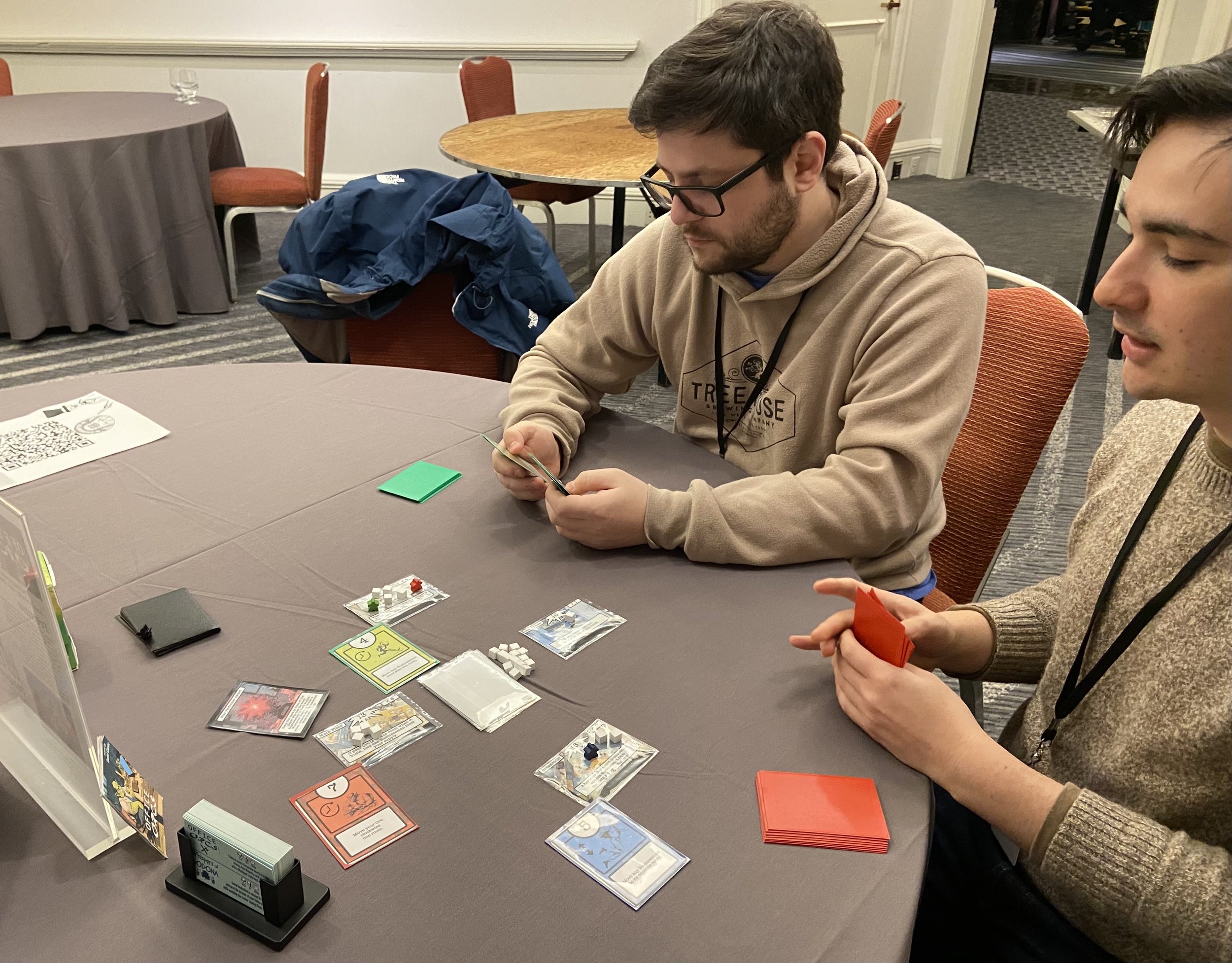
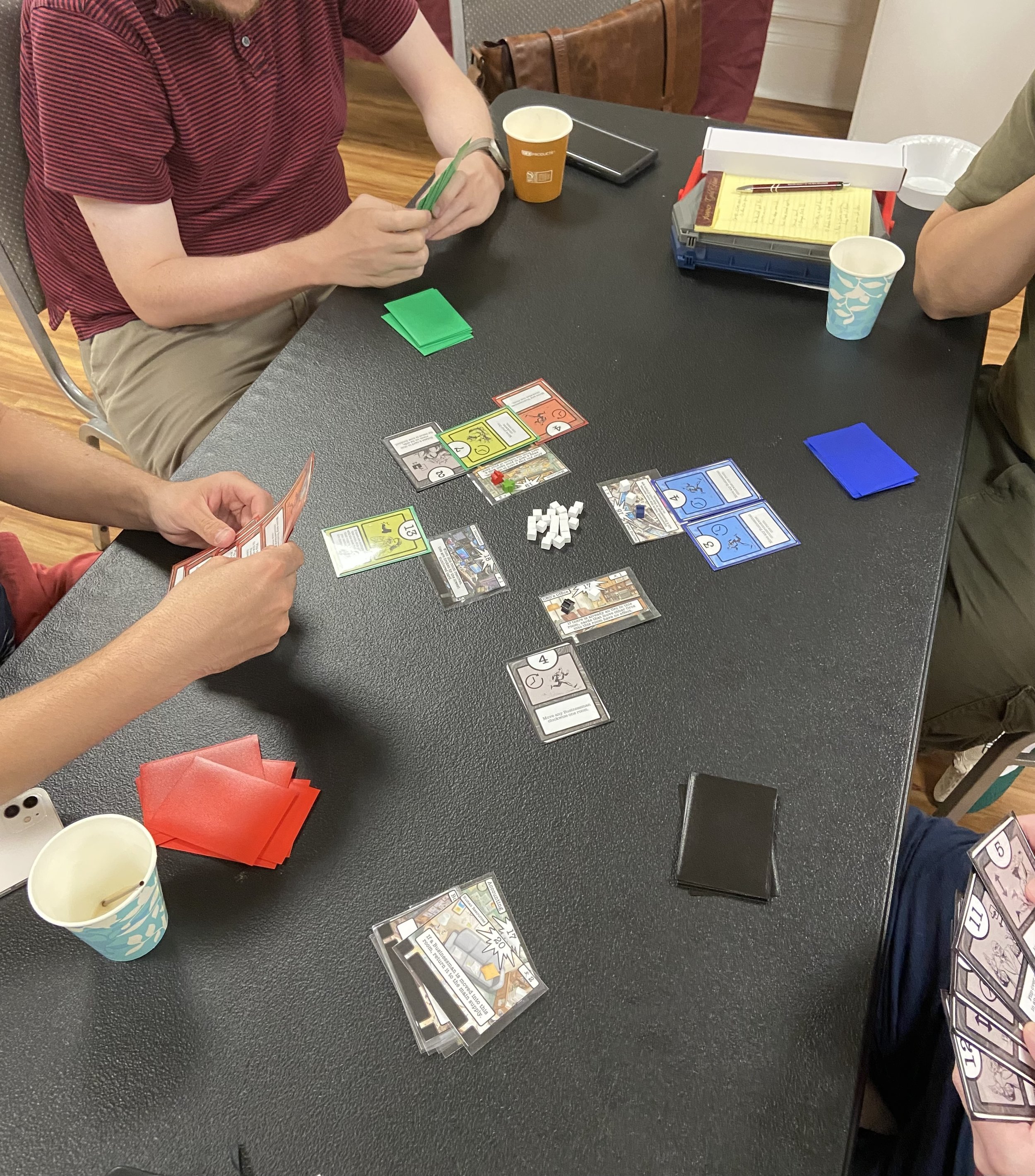
That brings me to how I will be showing off Office Orcs at PAX East this year. I will be participating in UNPUB @ PAX, which is a showcase for unpublished board games where people can stop by to test them out and give feedback. For this round of play-testing I will be focusing on “blind play-tests”, meaning that I will be testing to see if players can play through a full game of Office Orcs with no guidance or assistance from me at all. This is a great way for me to stress test the rulebook, which I believe is in a pretty good state, but you never know until you throw it in front of a bunch of strangers. I will be testing Office Orcs from 5:30-8:30PM on Friday and Saturday. So if you are going to PAX please come stop by and check out the fancy new components! You can see the full schedule of Unpub games here: https://unpub.softr.app/pax-east-2026

Contests

Sadly Office Orcs did not make it into the final rounds of any of the larger spring 2026 board game contests. However I did receive some very positive feedback from the Cardboard Edison judges, which is one of the largest contests for unpublished games. Cardboard Edison rates games on a scale from 1-7 in three categories.

I’m happy to report that Office Orcs received a
6/7 for Engagement
6.25/7 for Originality of Theme and a
5.25/7 for Originality of Mechanics

Not too shabby for my first ever submission, if I’m allowed to brag for a second.
Here are some select quotes that some of the judges sent along with their scores:

“The different rooms and actions create a bit of controlled chaos which aligns with the humor in the theme.” Pat Marino, USAopoly

“LOVE this very clever use of Black Jack mechanics and the melding with the theme of eating employees to downsize is fantastic. The art is wonderful and the play is very simple. I like the risk reward and the card effects modifiers. Overall a game I would buy now. Quick play - easy mechanics to learn and teach. Solid title.” — Jack Berkenstock Jr., The Bodhana Group (Therapy-Blended Gaming)

“Fun! Love the art and theme, very unique! Adds a fun, absurd narrative to gameplay and relates well to the mechanics. The bust mechanic creates exciting calculations and tension, and it's such a nice original way to approach it. I also love how the randomized room draws make each game different, increasing replayability. Feels very fresh and unpredictable. Great job!” — Serena Fadlun, Designer, Happy Haven

“Office Orcs was one of the best entries I had to judge. I'm sure it will find its way.”
— Enrique Blasco, Brote de Juegos
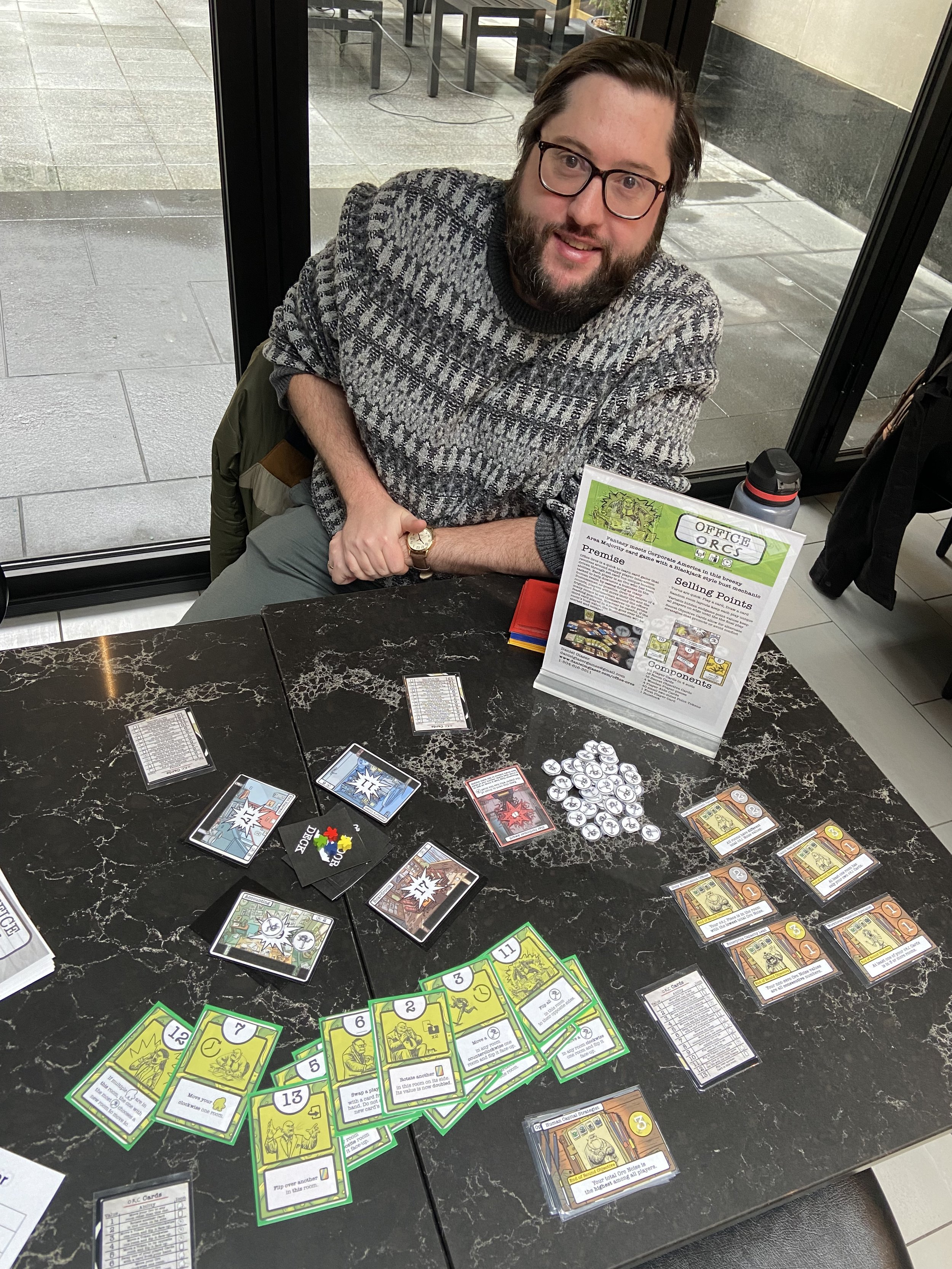
Thank you to the judges for their feedback, and also to any of you readers who have helped make Office Orcs that much better over these past months! Hope to see you again at PAX!
A Fresh Coat of Paint - Developer Diary #2

I didn’t think I would have enough news about Office Orcs to warrant an update before PAX East, yet here we are! A lot has changed with the game in the last two months and I’m excited to share it all with you. A lot of the new changes are direct suggestions from people who have reached out or helped play-test previous iterations of Office Orcs, so thank you very much! Anyway, let’s get right into it.


New Art!
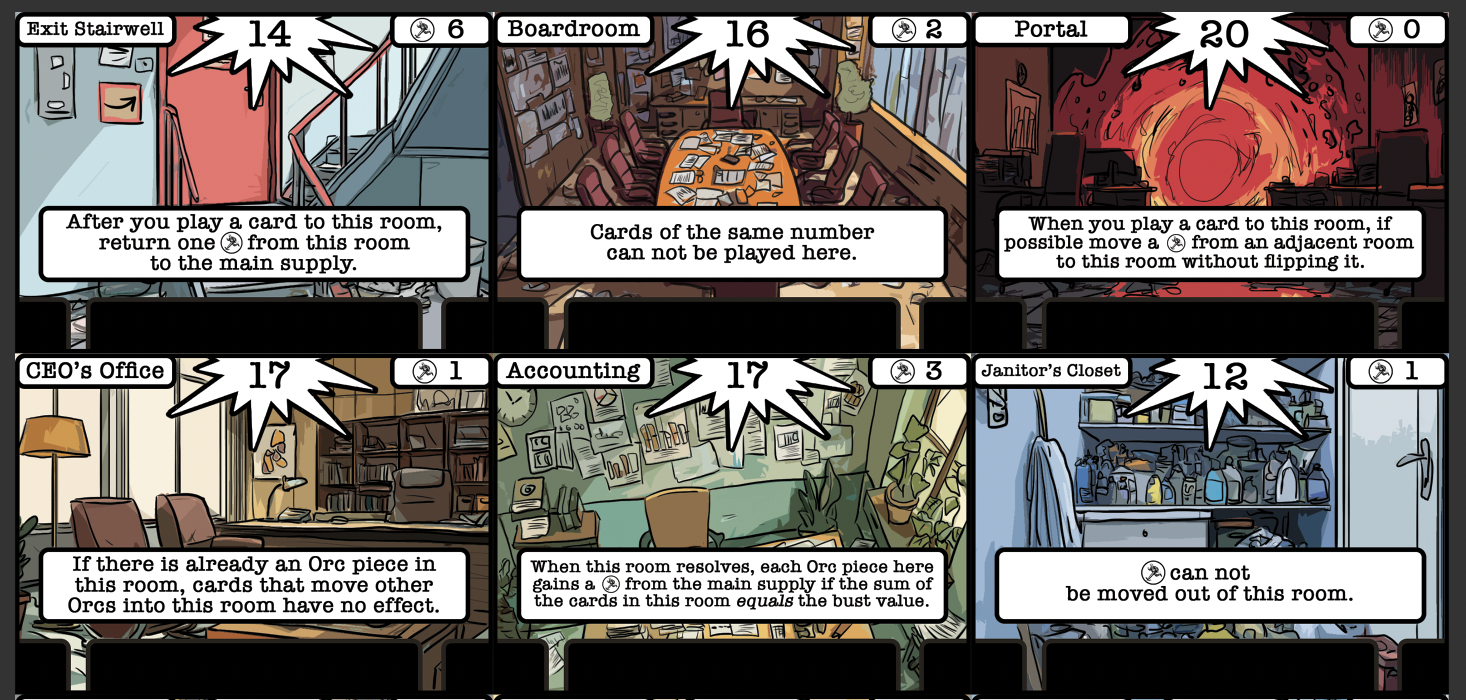
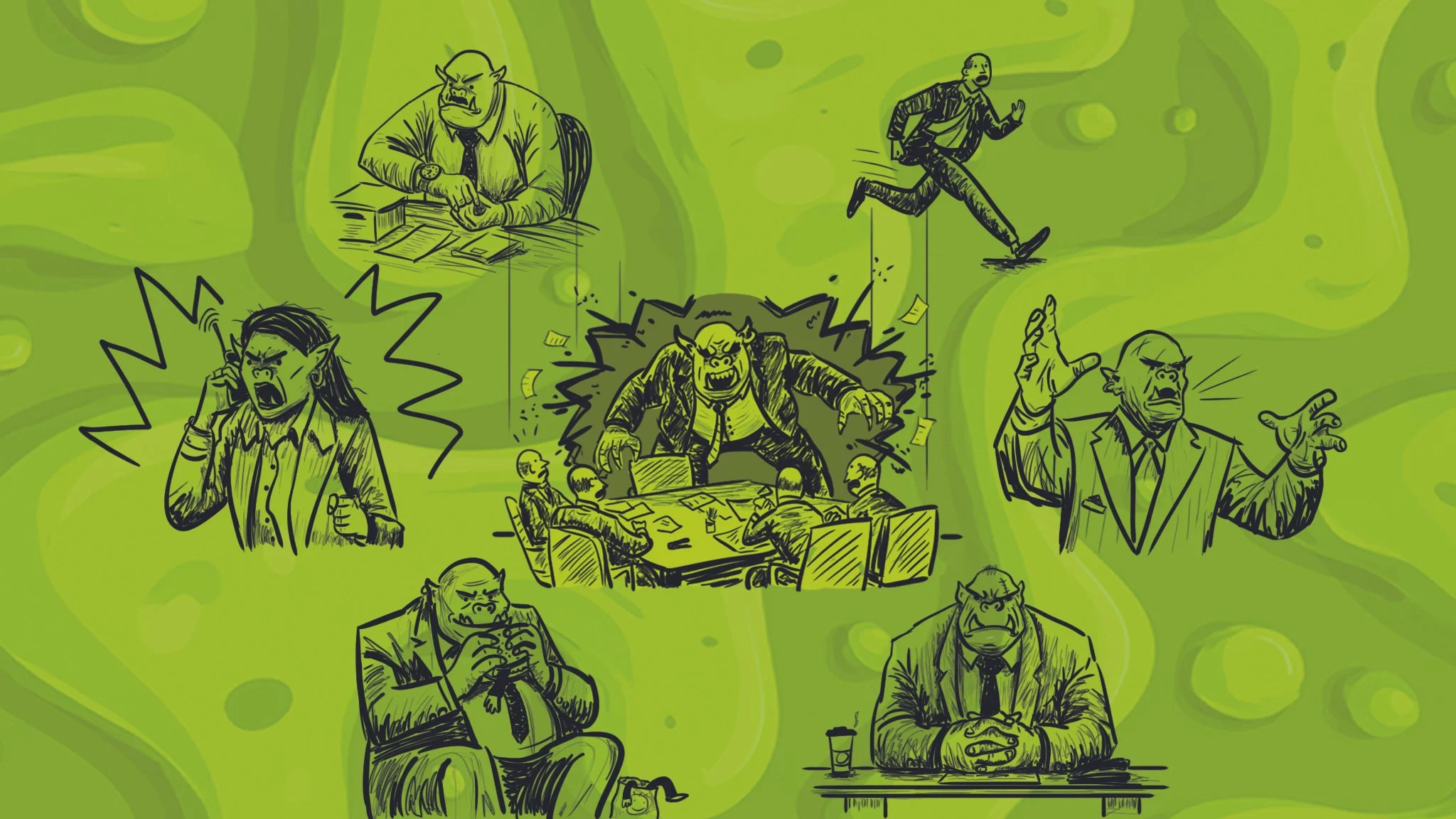
Probably most apparent, there is now a new look for the game, all drawn by me! Early on in the prototyping phase I used Mid-Journey to quickly get some art assets onto the cards just to have something for people to look at while playing. I personally am very visually oriented, so even though the game would have been totally functional with no art, the silly tone of the game conveyed through its imagery would not have been as obvious as I wanted it to be during testing.

This is slop.

AI in boardgames is a very contentious subject matter right now. If you go onto any tabletop or boardgame design forum right now you will find post after post of prototypes with AI generated art. The word “slop” gets inevitably thrown around in the comments in a negative way. To make my feelings clear here, I agree that “slop” is the right word. Again, prior to this point in my prototyping process for Office Orcs I was also making use of said slop, and I don’t deny that. However, prototyping is an iterative process, and at no point did I ever desire or plan that the imagery of whatever AI slop some algorithm generated for me would end up in a final product that could have my name on it. I went to art school for a reason damn it. I think my main point here is that game designers (really all designers) need to be upfront and transparent with where AI may enter their process. Before each early prototype play session of Office Orcs I would let people know that I did not draw the art on the cards, it is temporary and will change. At the end of the day people just don’t want to be misled about effort within creative endeavors. Making art is what makes us human, being cagey about the process betrays us all.

While I am happy I reached the point where I was able to jettison the slop off of my game, I think designers do need to acknowledge the ability of AI as a potential brainstorming assistant. A blank page, canvas, or design sheet can be very intimidating when starting fresh. In a perfect world, maybe you have your most trusted collaborators in the room to spitball ideas with, or endless time to mull over a single idea. We do not always have this luxury. This is where I think designers can interact with AI in a healthy way. When I was in art school, we tried a variety of different brainstorming “games” for projects, word association, mind mapping, starbursting, etc. AI is just another tool that can be used (not solely) at this phase of the creative process. But proceed with caution. We are doing ourselves a disservice believing that whatever text or image AI spits out is the end result of the creative process, rather than just a piece of scrap paper with some gibberish notes we can throw in the trash along with our doodles once the real art is being made.

Sorry, got a little preachy there. But beyond AI it’s important to remember that this new art isn’t even the end all in the first place. If my game is picked up by a publisher I fully expect it to be reworked or totally reskinned. Until this game is published, everything is temporary and I’m not married to any one idea or piece of art. Some other designers would say I already invested too heavily into the art this early on. All I can say to that is I drew it all myself so I didn’t have to pay anyone, and I had fun doing it, so oh well. Sue me I had a good time.

Quick room sketches with some color. I did 16 of these…


Variable Point Value Tokens
A problem I had in previous iterations of Office Orcs, was that when a player was doing very well and starting to run away in points it became obvious that no one else was going to be able to catch up. Each businessman you ate was always just 1 point and because a different amount of businessmen come out each round, there were instances where playing the final round of the game didn’t even matter as the total available points to score in that round could not put anyone else past 1st place.

While at Boston’s EverWinter convention in December, it was suggested to give the Businessman secret point values that are revealed at the end of the game. I thought this was a fun idea that could also add some more decision space to the game without adding too much complexity. I worked on a number of versions of Office Orcs that had different end game scoring mechanics over the holidays.

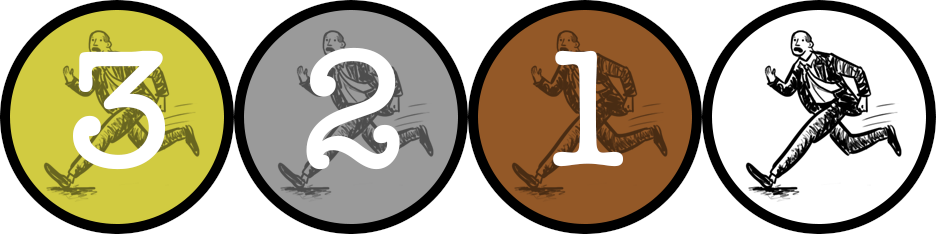
The Businessman were originally cubes, so first I replaced them with tokens that had hidden values of 1 or 2 points. This helped keep players engaged in the final round when there was a big lead, but even then the point variability was not enough to truly obfuscate the final scoring in a meaningful way. Adding a smaller amount of 3 point tokens helped some more, but then made the game feel too luck based if you happened to get a 3.

The breakthrough was when I started experimenting with having the point tokens flip over if they are moved. This provides a nice pull and push when moving tokens, as before a player moving a token usually only benefited that specific player, however it now reveals its value benefiting every other player as well. Even better was allowing the tokens to flip multiple times, allowing for some interesting plays where even though you may be unable to score points on a turn you can make it harder for another player to score big points by hiding tokens with larger values among smaller ones.

Currently with these new rules, when picking tokens it is always best to pick a face-down token if there are only 1’s visible because it might be a 2 or a 3. However I am just now experimenting with a new rule that when players lose tokens for whatever reason, they must lose their facedown tokens first. Do you take the safe 1 point token that you can’t lose? Or do you take a face-down one and hope you don’t lose it on a later turn.

All in all, I’m very excited about this new mechanic. Games have been much more interesting in the final round, as players are checking their count of tokens against everyone else’s trying to see who has the most face-down tokens and might score big end game points. It also creates some fun moments when a 3 point token is revealed and everyone starts rushing and fighting over space in the room that it’s in.


End of Round Objectives
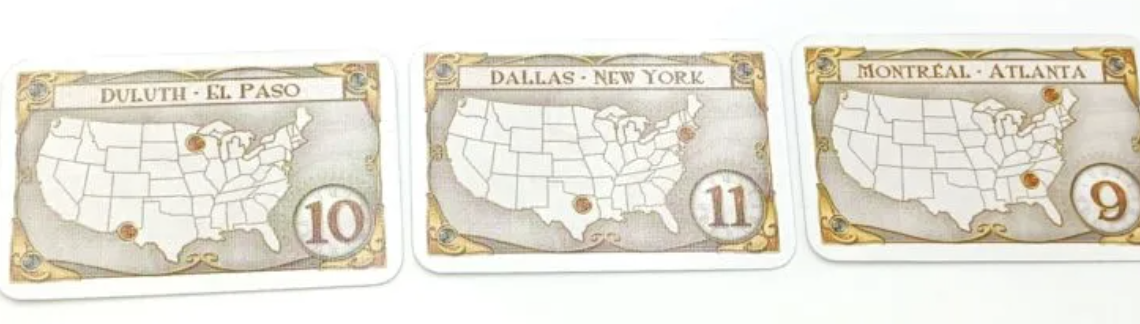
While the variable tokens are great, I still wanted something a little extra that could spice the game up when scoring points. I was looking through my game collection and thinking about what games handle the end game interestingly, but as simple as possible. It’s a little cliche now but I kept coming back to Ticket to Ride.

I think Ticket to Ride was the first game that I played that had end game scoring cards. Basically at the beginning of the game you can secretly pick a complicated train route to complete, if you build it you get a lot of extra points, if you don’t you lose points. This is great. It’s easy to explain, but more importantly it also provides some guidance to new players on something to aim for. If your first turn feels overwhelming and you have analysis paralysis, take a glance at your end game scoring card and it will literally give you a suggestion of what you should do on your first turn. I had noticed this feeling from players in my own game. Giving them something to aim for would not only speed up play at the beginning of the game, but also allow for more surprising moments during end game scoring as well.

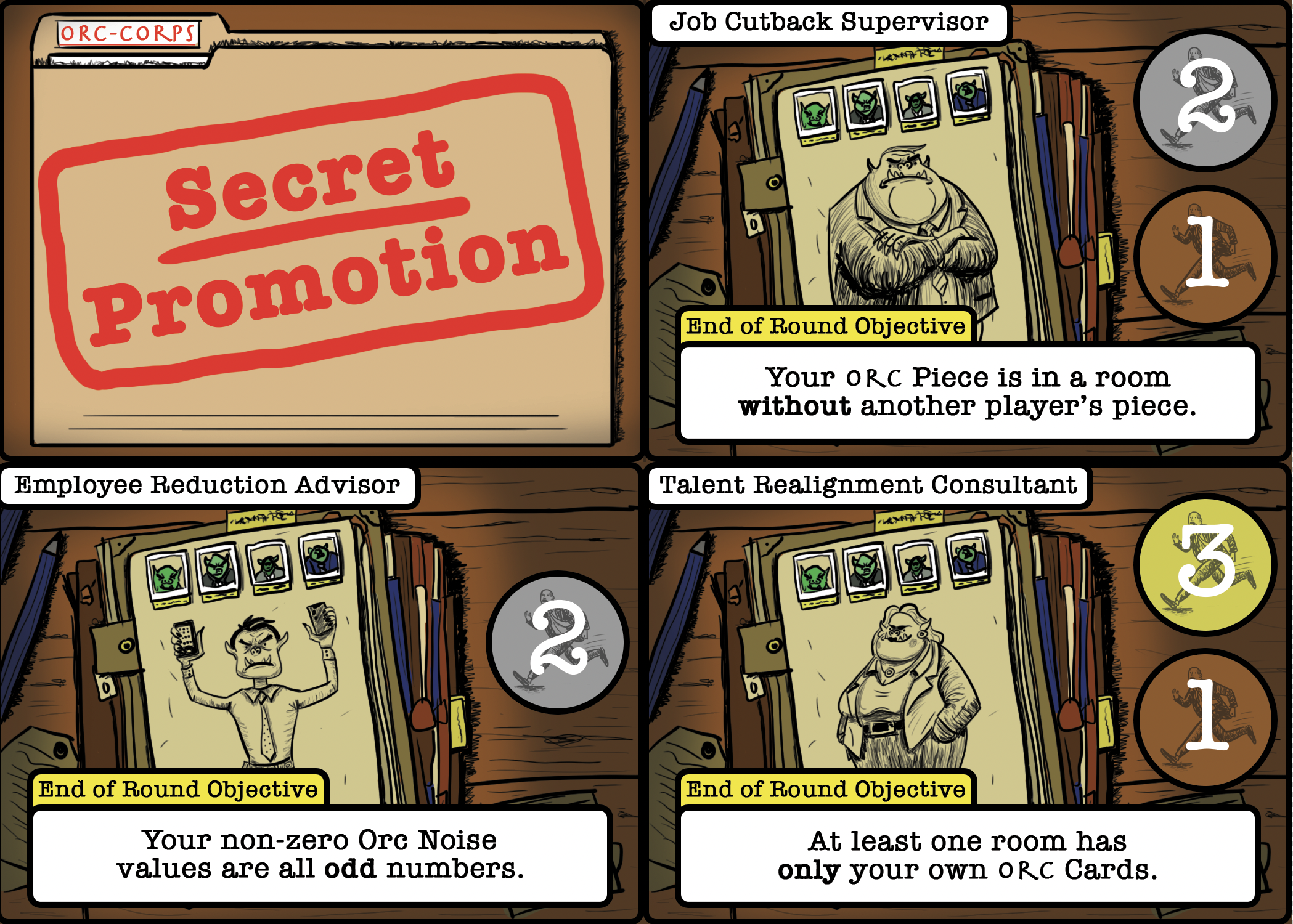
I also liked how in Ticket to Ride, you can get more of these end game cards if you want, you’re not stuck with just one. My game is much faster than Ticket to Ride so I shortened the requirements from end game scoring to end of round scoring, allowing for multiple opportunities to get points in alternative ways as opposed to just eating businessmen. Then I set to work making the cards.

Some examples of Secret Promotions you may score at the end of a round.

Wow! What a difference this has made to the game. Not only are the end game point reveals more dramatic, but it has made the turn by turn play much more interesting as well. Before players had to chose between maybe 3 potential good plays on their turn, with each play being completely reliant on Businessman placement. Now turns can become much more unexpected as players do weird things to meet their end game objectives. There is also a nice tension when deciding on your own turn what to do. Do I take these guaranteed small points now? Or do I leave them and instead try to get the big points at the end of the round. The more interesting the decisions, the more interesting the game! I also had a lot of fun coming up with these card names as well if you couldn’t tell.


Whats Next?
Balancing, balancing, balancing. I think I’m at the point where I don’t want to add anything else to the game. Office Orcs is a small box card game, and introducing any more complexity would clash with the expectations the game gives off visually and in it’s theme. Now it is time to test and keep testing. There is a lot of math to balance here. Getting the point values correct on the End of Round objectives has been difficult. The easy objectives should have less points than the hard objectives, but sometimes easy/hard is subjective depending on who is playing. When I’m not testing with real people I’m testing it on my screentop prototype and keeping track of wins, losses, points, objectives… it’s a lot. I’ll get there.


Contests!
Another reason for now getting rid of any remaining imagery that I did not personally create was to start submitting to contests! I didn’t feel comfortable submitting my game while there was still stuff that could be considered “slop”. If I’m going to lose or win, I want it to be with stuff that I alone made. Submitting to contests with AI imagery is unacceptable, and I hope the contest organizers feel similarly. So far I have submitted to Cardboard Edison, the Boulogne-Billancourt Contest, and the Swedish Annual Game Design Contest. Watch my 3 minute pitch video here: https://www.youtube.com/watch?v=fIFBiPFSceo


Boinga Game Festival
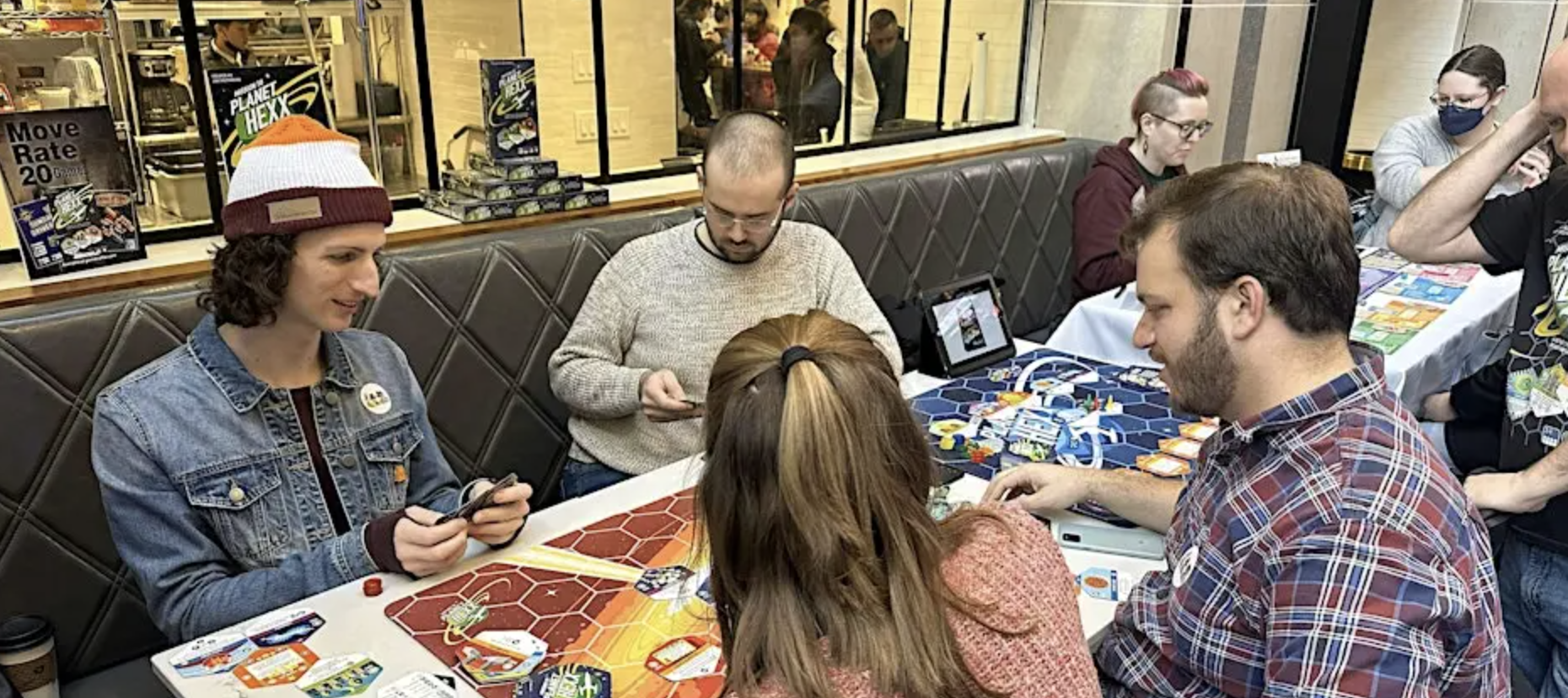
I was also accepted to demo Office Orcs at Boinga Game Festival at High Street Market in Boston on February 21st! I have attended this festival for the last 3 years, but this will be my first time as a designer. It’s in a food hall which sounds like an odd place to play games, however you do get some people who might not usually play boardgames walk by and it’s a good way to network and pitch your game outside of your comfort zone. If you’re in town I hope to see you there, stop by and say hi!

An Introduction to Office Orcs Developer Diary #1

In late July of this year, I woke up one morning and immediately rushed to my board game table with a deck of playing cards, some sticky notes, and a pencil. After a couple of hours the very first iteration of my card game Office Orcs was born. It was incredibly unbalanced, ugly, and basically illegible to anyone but me, but it worked. Exhausted but excited, my wife finally pulled me away from the table when she realized I didn’t even know it was dinner time.

That would make for a great story if that was the genesis of my game idea, but the truth is always much more messy than that. I had actually been mulling over some sort of board or card game that involved orcs or some other fantasy creature ransacking a modern office setting for some years now, but I had never been able to settle on a format. One iteration of this idea was a web prototype I built in Javascript back in 2022, that somehow morphed into a 1 vs 1 Bigfoot Battleship type game. Things were looking good, but then I gave up on the idea after I realized that the game was always “solvable” after the first turn. I had made an advanced tic-tac-toe.

Although it is dejecting to have to go back to the drawing board after spending a good chunk of time on a design, I find that it’s important to let your brain fall down these rabbit holes at least a little bit. You end up stress testing mechanics and coming across concepts that will elevate your next idea that much higher. Still I could not shake off the office setting from my brain. Over the next few years I started and then quickly stopped on a number of fantasy office ideas as I kept running into a soup of game mechanisms that didn’t mix.


I’m still not really sure how I suddenly got the main flow of the game hammered down on that random July day when I woke up, but I think it just clicked that I needed to give in completely to the theme of the game and let it drive the gameplay loop, not me. My preconceived notions on what I think makes a game fun were standing in the way. The game is in an office setting, so why not have location cards for different types of office rooms? Different rooms in offices do different things, so why not give them effects that match their purpose? Why are the orcs even in this office in the first place, well to eat people obviously, so there’s the scoring system. The eureka moment though was when I added varying bust values to each office room and started playing against myself with a standard deck of playing cards. At that point I realized I had something here.

I however did not want to run into the same problem my Bigfoot game had, so I knew I needed to start testing what I had in front of other people as soon as possible. I slapped some abilities on the cards without thinking too much about them, grabbed some placeholder art, and repurposed some board game components from other games I own. Then thanks to my lovely wife who sat and played the first versions of Office Orcs when it was a totally unbalanced mess, I was able to massage some of the abilities and card values to a place that I felt good showing it to strangers.


That leads us to the boring but important part. The next few months and even beyond are just refining, adjusting, refining… I am lucky to live in an area that has access to many different game groups and types of gamers. Since July I have been able to test the Office Orc prototype at a number of different events. So far I’ve tested my game at my library’s game nights, a board game meetup I host at a local brewery, the Boston Game Maker’s Guild testing events, and most recently at the Everwinter Gaming Convention. Thank you to everyone who has a played a version of this game at some point, your feedback has been invaluable! The best part of this whole process is meeting people who after playing a round, lean back and say “you know, that was actually pretty fun.” Even better is when people get excited and propose even more mechanics and content that could make the game bigger and more grandiose. I’m hoping to keep Office Orcs as a quick and light card game, but the enthusiasm for even more “game” keeps me on the lookout for potential expansion opportunities!


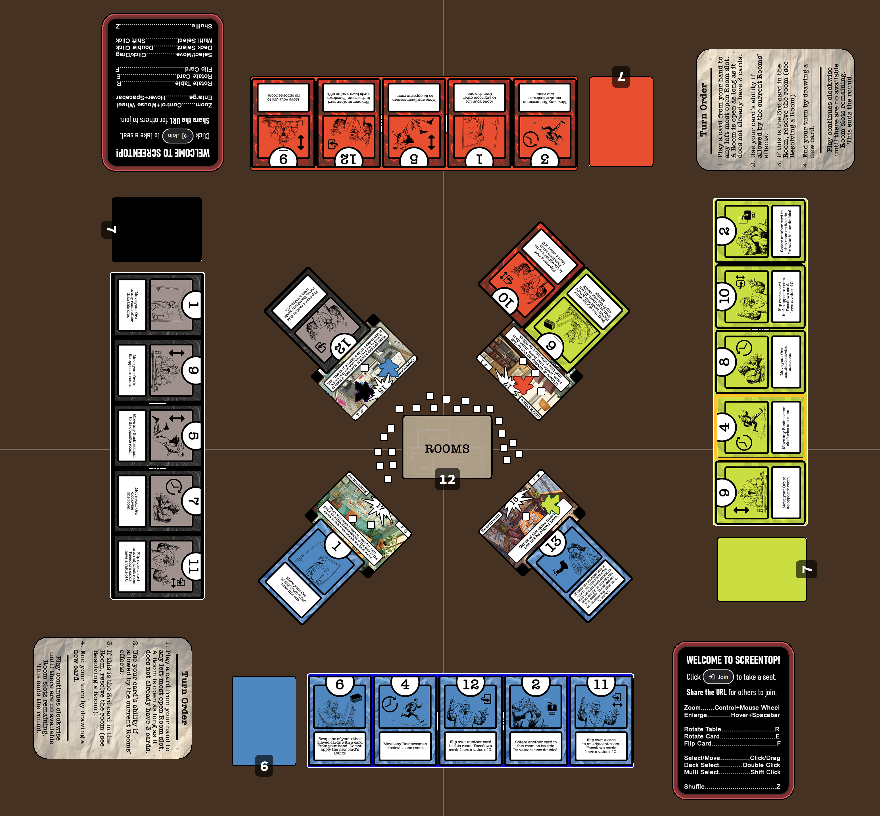
Beyond just lots of testing, there was a lot more work done in the last few months. These include writing the first draft of the rulebook, creating a sell sheet, and building an accessible online prototype on Screentop. I can not overstate how valuable building the online prototype has been. While playtesting in person can be difficult to coordinate, it is much quicker to organize online. But perhaps more importantly whenever I have some downtime I can quickly pull out my phone and run through a game in “Admin” mode where I can play as each player and “math” out any potential edge cases that I should handle. Nothing is stopping me from logging a playtest on the subway!

I will leave a word of caution here though, to not become too reliant on the online prototype. No matter how hard you try, a screen can not simulate what it feels like to physically shuffle a deck, how the light might reflect on your cards, or how it feels to sit across the table from someone with the game in the middle. At the end of the day you are designing a tactile product that is meant to be touched, and every decision you make should be done with this in mind.


So what’s next? In its current state I consider the game to be close to done (at least gameplay wise), however there are still some tweaks I need to do to make the end game more interesting and less deterministic. Currently in the final round of the game, if a player is too far behind in points, they may have no way to catch up to first place rendering their final plays pointless other than to spoil other players. I recently added a “slow down mechanic” card that solely impacts the first place player to prevent them from totally running away with the game, but there is still room for improvement here. This last weekend a playtester proposed the idea of swapping the current point cubes with two sided point tokens. Each token would have a secret number value (from 1 to 2 or 3) on one side that is hidden to all players until the end of the game keeping player’s true scores unknown until the final reveal. I think this is an elegant way to add some end game ambiguity without adding any complexity. However I will need to do a good bit of playtesting to make sure this doesn’t feel too unfair for the first place player. Alternatively, I could have my new “slow down” card make the first place player give a point to the last place player. Another playtester proposed hidden objective cards. Regardless, more design work needs to be done here.


Beyond that issue, here is what is remaining to be done.

  • “whose” typo in rulebook

  • Bold action words on Orc cards

  • Water Cooler room “each orc” clarification

  • Cards that move businessmen should clarify it is a single businessman

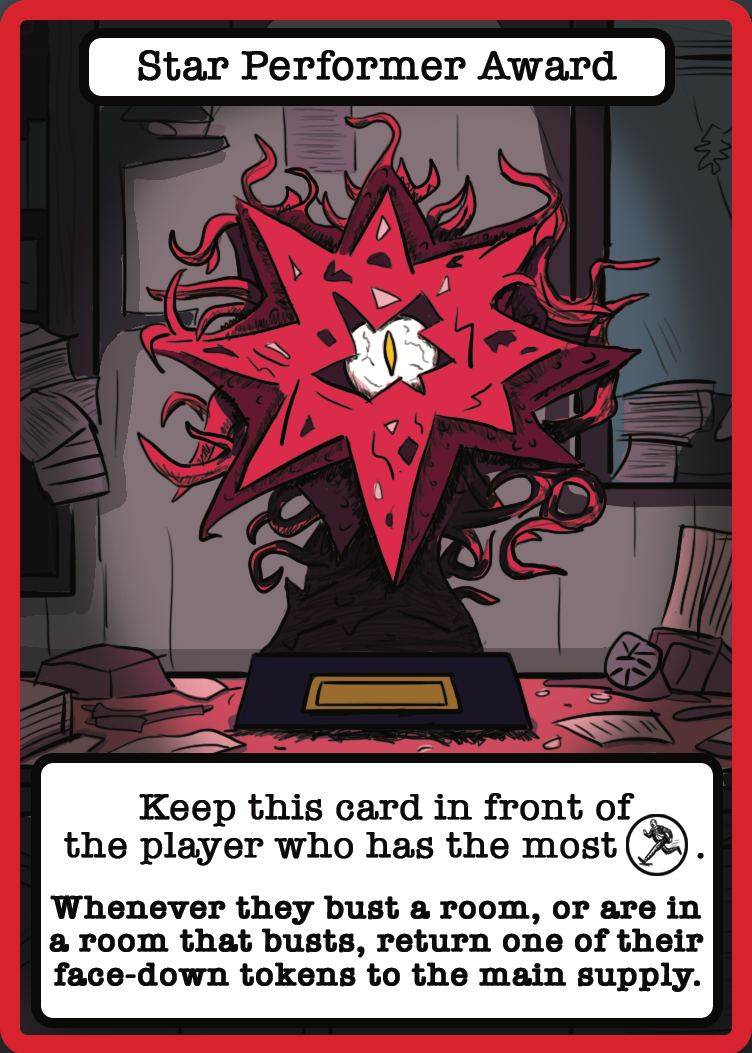
  • Add Star Performer Award card to rulebook and online prototype

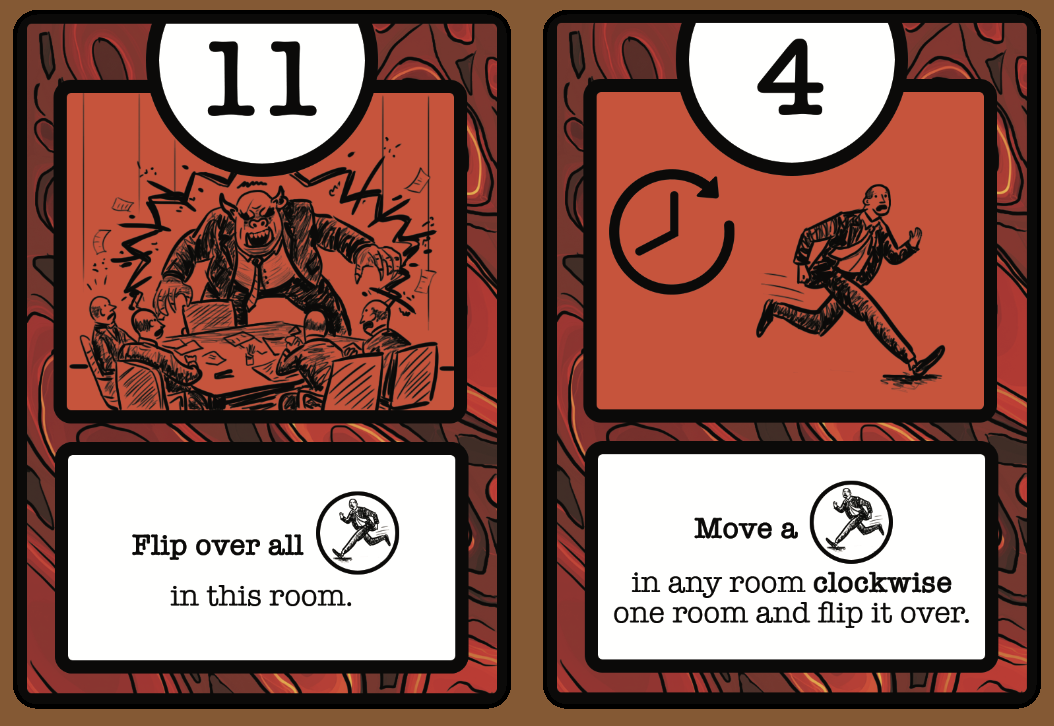
  • The Orc 2 card should say “rotate another card

  • Add clear icons to indicate room effects

  • Exit Stairwell and Closet rooms are too punishing, continue balancing room values

  • Two player rule clarifications: orc card colors correspond to orc piece of the same color

  • Remove placeholder art for illustration (big to do)


Anyway, thanks for following along with this design process. I have just signed up for Unpub playtest slots at PAX East in March 2026 for even more testing, so I will probably update this blog again after that event with what’s changed. If you have any questions about the game or are a publisher that’s interested, please do not hesitate to reach out at danielglasergames@gmail.com !